


The Shadowing Technique: A Step-by-Step Guide for Language Learners
What the shadowing technique is, what research says it improves, and a step-by-step routine (mumbling, overlapping, shadowing) you can follow with any YouTube video.
5 min read
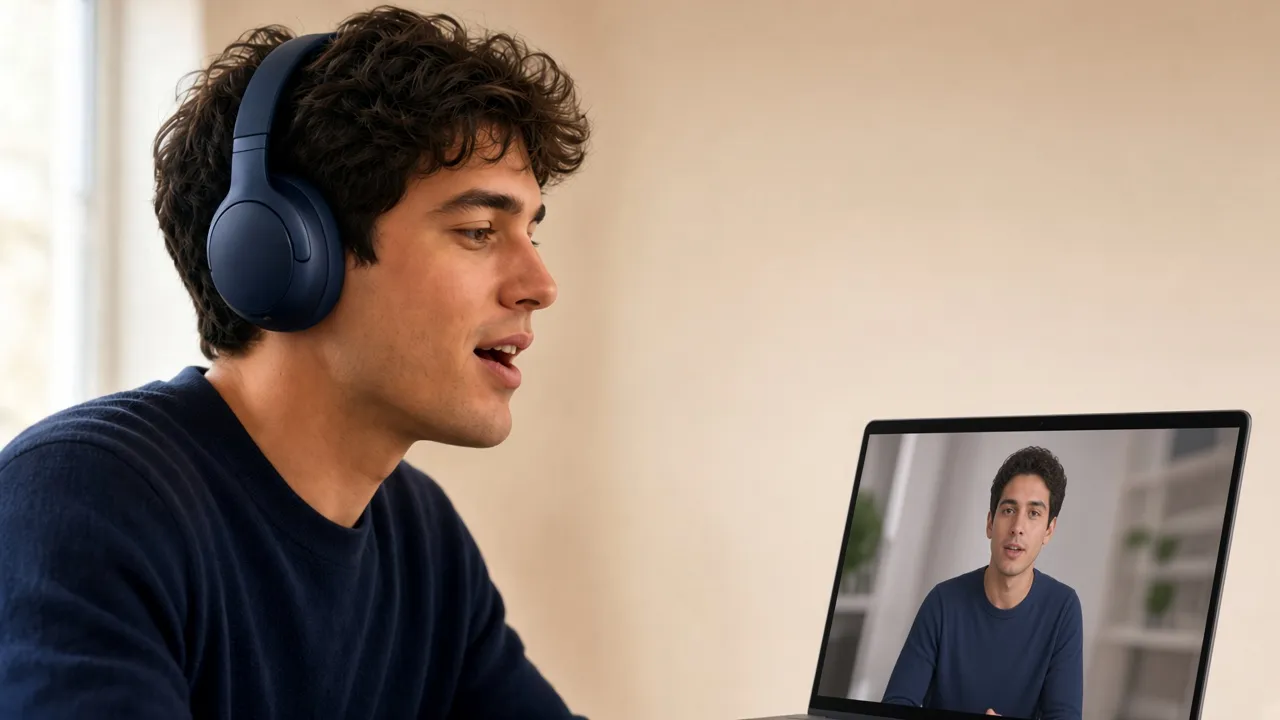
Shadowing means listening to a native speaker and repeating what they say almost at the same time, like a shadow that follows half a second behind. It trains your ear and your mouth together, and it’s one of the few ways to practice speaking alone with any video you like.
This guide covers where shadowing comes from, what research says it helps with, and a step-by-step routine you can start today.
What is the shadowing technique?
Shadowing comes from simultaneous interpreter training, where trainees repeat speech in the same language to get used to listening and speaking at once. Polyglot Alexander Arguelles popularized it among language learners, famously shadowing audio while walking briskly outdoors and speaking loudly and clearly.
In language classrooms, especially in Japan and Korea, shadowing became a standard listening exercise. You’ll also see related techniques:
| Technique | What you do | Script visible? |
|---|---|---|
| Mumbling | Quietly mouth along with the audio, focusing on rhythm | No |
| Overlapping (parallel reading) | Read the script aloud at exactly the same time as the speaker | Yes |
| Shadowing | Repeat what you hear a moment later, without reading | No |
| Content shadowing | Shadow while paying attention to meaning, not just sound | No |
Does shadowing work? What research says
Most research on shadowing comes from English as a foreign language classrooms, especially in Japan:
- Listening comprehension. Studies such as Hamada (2016) found that shadowing improved learners’ listening, and that it seemed to help most with phoneme perception, recognizing the sounds in connected speech, among lower-intermediate learners.
- Pronunciation and prosody. Learners who shadow regularly tend to improve rhythm, stress and intonation, the “music” of the language that word-by-word practice misses.
- Why it works. Kadota (2019), a book-length review of shadowing research, connects it to the brain’s phonological loop: by repeating sounds immediately, you hold them in working memory long enough to process them, which speeds up the link between hearing and understanding.
The research also suggests a limit: shadowing works best with material you mostly understand already. If the audio is far too hard, you end up imitating noise. This is the same principle behind comprehensible input.
How to shadow: a step-by-step routine
Plan for about 15 minutes per short clip.
- Pick a 1–2 minute clip at your level. One clear speaker, natural but not rushed. Vlogs, interviews and YouTube explainers work well.
- Listen and understand first. Watch with subtitles, using dual subtitles if needed, and look up anything unclear. You shouldn’t be decoding meaning while shadowing.
- Mumble along. Play the clip and quietly follow the rhythm. Don’t worry about every word yet.
- Overlap with the script. Read the subtitles aloud at the same time as the speaker. Match the speed, the pauses and where the voice rises and falls.
- Shadow line by line. Hide or ignore the subtitles. Play one line, repeat it immediately, and replay any line you stumble on.
- Shadow the whole clip. Follow the speaker without stopping, about half a second behind.
- Record and compare. Listen to your recording next to the original. Pick one thing to fix next time, such as a vowel, a linking sound or the intonation of questions.
Do it daily, briefly. 10–15 minutes every day beats an hour once a week. Re-use the same clip for several days until it feels easy, then move on.
Common mistakes
- Material that’s too hard. If you can’t understand the clip with subtitles, choose an easier one.
- Mumbling forever. Mumbling is a warm-up. Speak out loud at full volume for the main practice.
- Chasing every word. Get the rhythm and intonation right first. Exact words come with repetition.
- Never listening back. Without recording yourself, you rarely notice what to fix.
- Only shadowing. Shadowing builds listening and pronunciation, but you still need to produce your own sentences. Combine it with speaking or writing practice.
Shadowing for English, Japanese and other languages
- English: focus on linking and reductions, like want to → wanna and did you → didja, and on sentence stress. TED talks and interviews with a single speaker are good material.
- Japanese: keep the rhythm even (each mora takes about the same time) and listen for pitch accent. Short anime scenes and Japanese YouTubers’ vlogs work well. See learning Japanese with anime for a routine that includes shadowing.
- Korean: pay attention to sound changes between words, which subtitles don’t show.
- French: practice liaison and the smooth, connected flow of a whole phrase.
- Spanish and German: clear syllable timing in Spanish and word stress in German compounds are good first targets.
Shadowing on YouTube with LingTube
LingTube’s shadowing tool is free for every user and runs in your browser on YouTube and Netflix:
- Line-by-line playback. Practice one subtitle line at a time, then move to the next.
- Record yourself. Record your attempt right after the speaker’s line.
- Waveform comparison. See your recording’s waveform next to the original, which makes differences in rhythm and pauses visible.
- Dual subtitles and translations help you understand the line before you shadow it.
One honest limitation: LingTube compares waveforms but doesn’t give an AI pronunciation score. If automated scoring matters to you, Trancy offers it as a paid feature.
FAQ
What is the difference between shadowing and repeating?
Repeating means listening to a whole sentence, pausing, then saying it. Shadowing means speaking while the audio plays, a fraction of a second behind, which trains you to process speech in real time.
How long should I shadow each day?
Around 10–15 minutes a day is enough for most learners. Short, daily sessions with the same clip repeated over several days work better than long, occasional ones.
Is shadowing good for beginners?
Yes, with easy material. Beginners should start with slow, clear audio and lean on mumbling and overlapping, reading along with the script, before shadowing without text.
Does shadowing improve speaking?
It improves pronunciation, rhythm and the speed at which you produce familiar phrases. To speak freely, you also need practice building your own sentences.
Can I shadow with YouTube videos?
Yes. Choose a clip with one clear speaker and good subtitles. Tools like LingTube let you replay line by line, record yourself and compare with the original.